
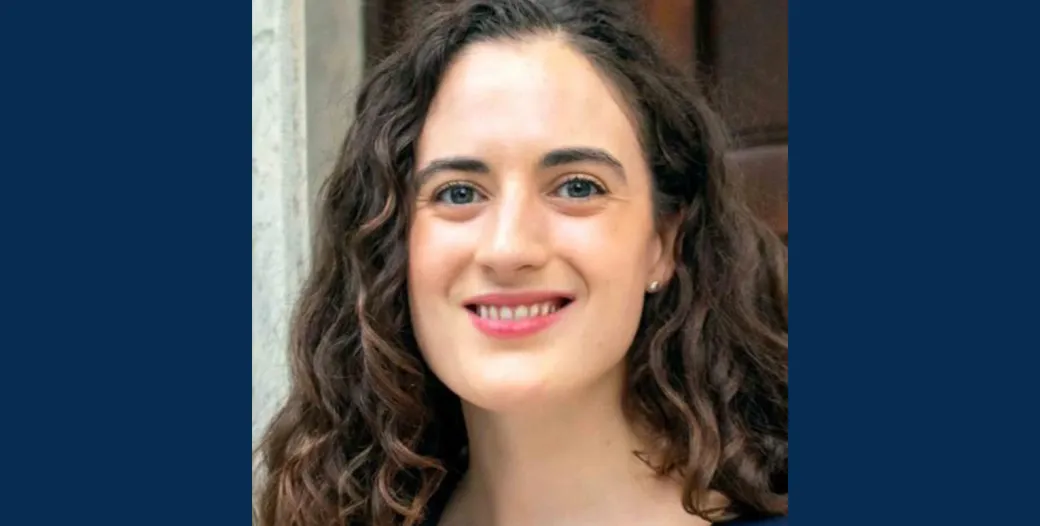
Department of Music Lecture: Sophie Brady, Assistant Professor of Musicology, University of Arkansas
Title
"African Experimentalism: Avant-Garde Potential at Radio France’s Studio-École (1955-1969)"
Abstract
Between 1955 and 1969, more than 300 African students from over a dozen countries attended the Studio-École, a radio training school founded by composer and philosopher Pierre Schaeffer and operated near Paris by the French overseas broadcasting service. Many trainees began their studies as colonial subjects and graduated as citizens of independent nations. Established to train African broadcasters, producers, and technicians, the Studio-École served France’s efforts to preserve its political and cultural influence amid decolonization and the Cold War. Yet its technical and creative education also provided students with opportunities to explore the possibilities of radiophonic sound beyond the institution’s colonial objectives.
This talk examines the Studio-École as a site where musical experimentation, technical education, and decolonization intersected. While scholars have emphasized the studio’s radical potential within twentieth-century music (Bohlman 2021; Cohen 2021; Goldman, Gribenski, and Romão 2020; Iverson 2018), I consider how the Studio-École, a broadcasting, rather than electronic music studio, complicates conventional understandings of experimentalism. Students learned recording, editing, sound montage, and radiophonic production techniques that overlapped with practices associated with the European avant-garde. Despite Schaeffer’s claim that experimental music and African radio work were separate, the Studio-École shared personnel, technologies, pedagogical approaches, and resources with avant-garde institutions such as the Studio d’Essai and the Groupe de Recherches Musicales. For some trainees, the experimental dimensions of their education extended beyond radio production into musical careers that reworked techniques associated with the European avant-garde within popular and traditional idioms.
Drawing on student projects, instructor notes, and oral histories, I explore how African trainees navigated the contradictory possibilities of this late colonial institution, using their newfound skills and resources to develop new forms of sonic expression and even, at times, challenge or reject the political structures that sustained it. By tracing the circulation of experimental techniques between the Studio-École and its students’ later musical practices, this lecture argues for a broadening of our understanding of musical experimentalism that moves beyond specialized studios and autonomous compositions to consider the entanglements of aesthetics, pedagogy, technological innovation, and decolonization.
Biography
Dr. Sophie Brady researches the history of twentieth-century experimental music, focusing on connections between the European and African continents. Her first book, Towards a Global Avant-Garde: African Experimental Music and the Radiophonic Imagination, follows the musical lives and influences of a group of musicians from more than a dozen African countries who studied at the Studio-École, a radio school in Paris founded by experimental composer and philosopher Pierre Schaeffer. How does the existence of a robust tradition of musical experimentation on the African continent change our existing understandings of the avant-garde and African music? What does African musical experimentalism sound like? To answer these questions, Brady examines interconnected individuals and musical institutions spanning West Africa, France, and the United States. Through this transnational lens, Brady reveals how avant-garde composition was reimagined as a product of postcolonial movement—of both people and musical ideas—between continents, enabled by technologies like radio in the second half of the twentieth century. She has presented at national and international conferences, and her publications have appeared in the Journal of Popular Music Studies and the Journal of the American Musicological Society.
Dr. Brady received her PhD in historical musicology from Princeton University in 2024. She was awarded the Paul A. Pisk prize by the American Musicological Society in 2022, and her doctoral research was supported by the International Dissertation Research Fellowship from the Social Science Research Council, the Chateaubriand Fellowship, the M. Elizabeth Bartlet Fund for Research in France and the Jan LaRue Travel Fund for European Research from the American Musicological Society, and a Pre-Doctoral Fellowship from the West African Research Association, among others. Prior to joining the University of Arkansas, Dr. Brady taught at the Peabody Institute of Johns Hopkins University and Rowan College of South Jersey.
At Arkansas, Dr. Brady teaches undergraduate and graduate-level courses on the history of western music, twentieth-century music, music appreciation, music and politics, and the history of musical technologies.